From the reading list to the exam room
Cite a paper from its DOI, find out how fast you read, turn your notes into a quiz and plan every revision day up to the exam.
Free · No account · Your text stays in your browser
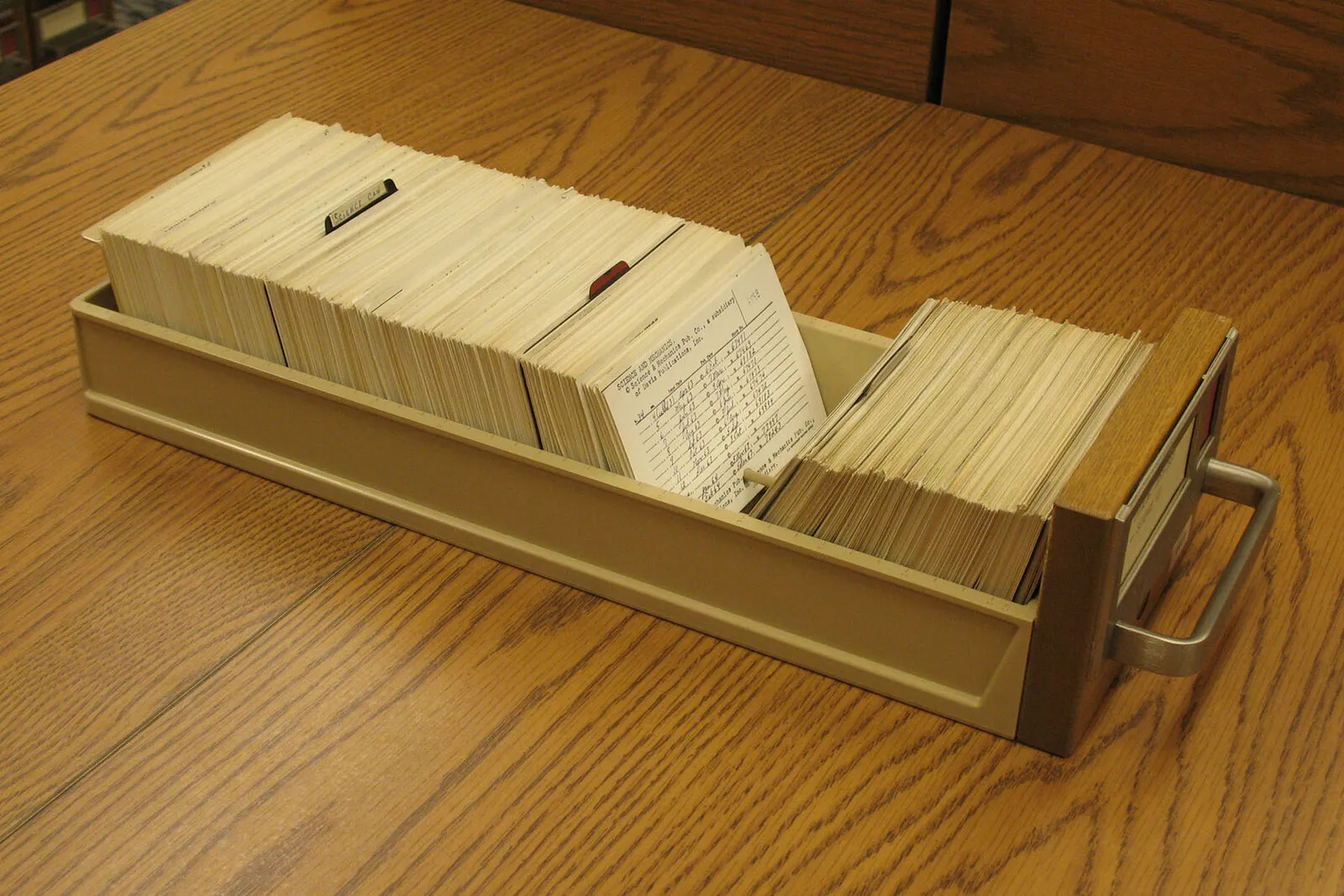
Reference card
Cepeda, N. J., Pashler, H., Vul, E., Wixted, J. T., & Rohrer, D. (2006). Distributed practice in verbal recall tasks: A review and quantitative synthesis. Psychological Bulletin, 132(3), 354–380. https://doi.org/10.1037/0033-2909.132.3.354
In the text (Cepeda et al., 2006)
Eleven tools for the week before an exam
Each card shows what the tool gives you back, made by the tool itself.
No tool matches that. Clear the field to see all of them.
Sources and citations
Reading
- Reading speed testWords per minute on a short passage, then five questions on itpassage → words per minute + 5 questions
- Reading time calculatorHow long a text, a chapter or a whole book takes at your speedtext, words or pages → minutes
- Speed reader, one word at a timePaste any text and read it word by word at the pace you setany text → one word at a time
Practice and planning
- Spaced repetition scheduleA revision timetable for your topics up to the exam, as a calendar filetopics + exam date → plan, .ics
- Quiz maker from your listTerms and definitions become a multiple-choice or typed quizterm – definition → quiz, worksheet
- Fill in the blank and cloze makerClick words to blank them: worksheet, word bank, answer key, Anki clozeparagraph → worksheet, key, Anki
Words
- English vocabulary size testHow many of the 2,800 core English words you know, band by bandyes or no → words you know
- Spelling testYour word list read aloud; type each word and see what you missedword list → read aloud → marked
- Word frequency counterWhich words a text uses most, with phrases and a CSVtext → top words, phrases, .csv
How fast adults read
Average words per minute for adults reading English, from a review of 190 studies.
- silent reading, non-fiction
- 238
- silent reading, fiction
- 260
- reading aloud
- 183
Brysbaert, 2019, Journal of Memory and LanguageTest your own speed
Keep going on your iPhone
Three apps from the maker of these tools, for the part of studying that happens away from a desk.

Studyink: Cards With Sources
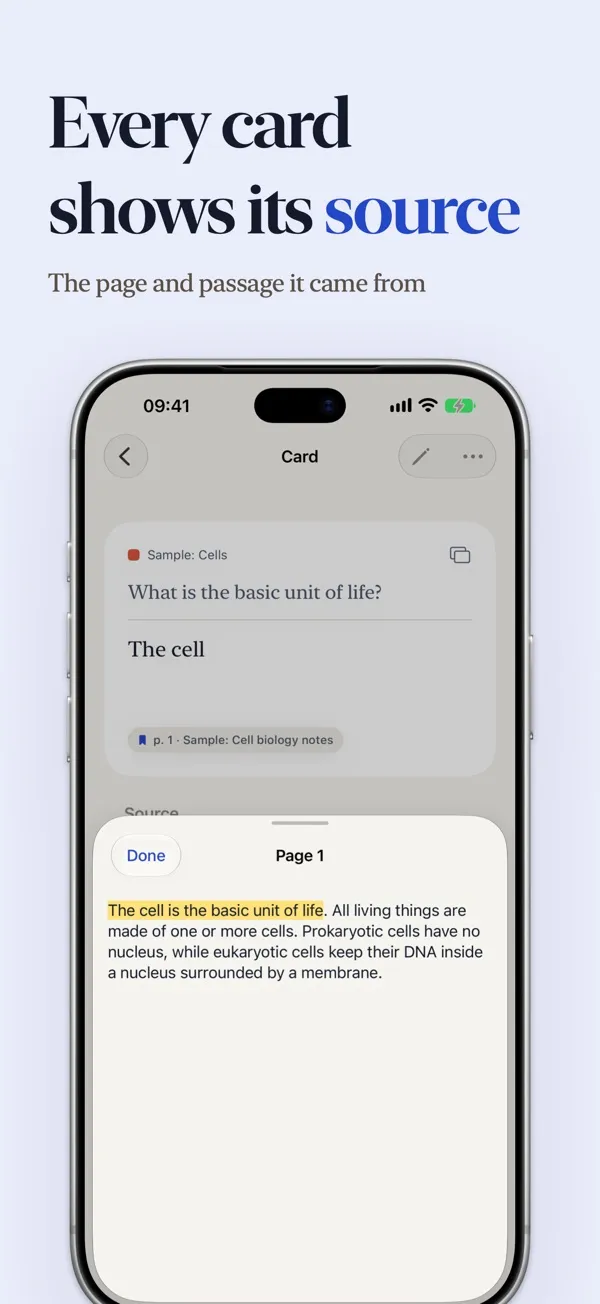
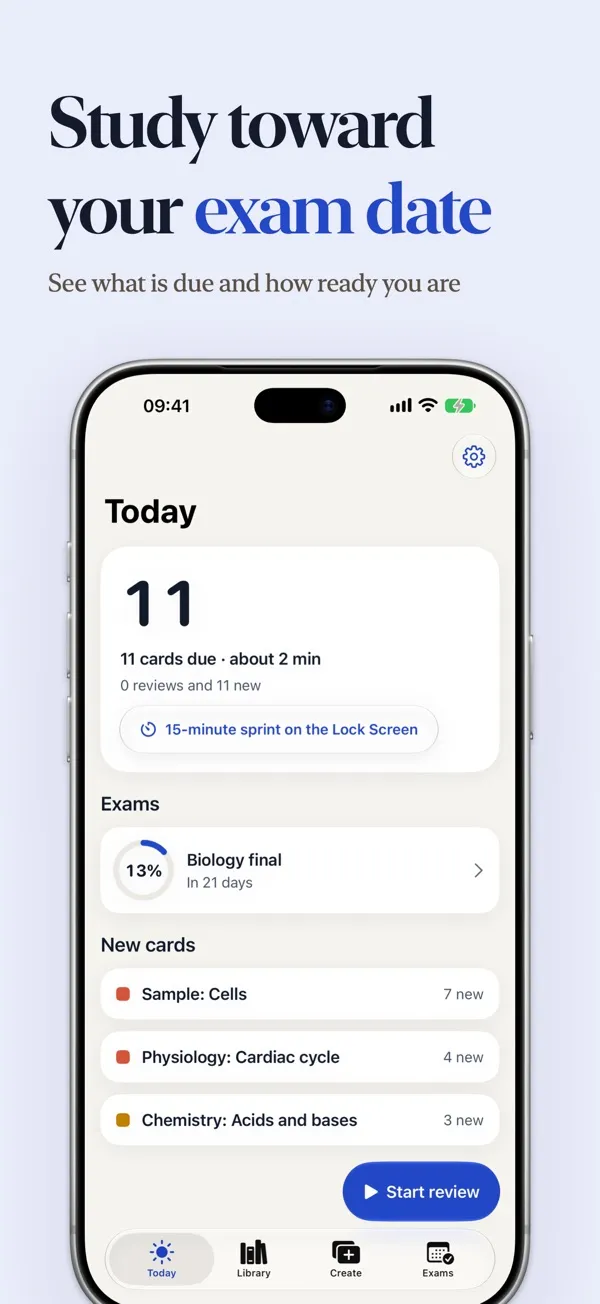
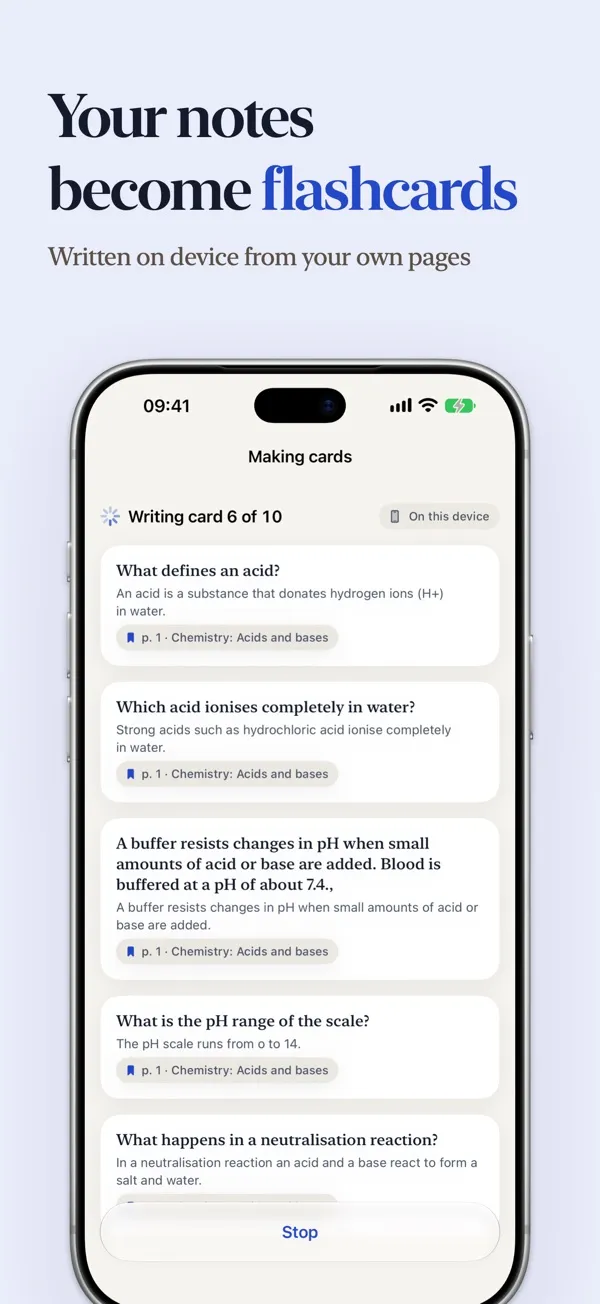
Studyink turns your notes or a PDF into cards that keep their source page, and plans each day up to your exam.
- Scan notes, open a PDF or paste a chapter, then keep, edit or reject each card
- Every card carries a tab with its page; tap it and the passage opens, highlighted
- Add an exam date and each day is planned in cards and minutes
Flashcards live on Studyink’s site
- Printable flashcardsMake cards from notes or a PDF and print them double-sided.
- CSV into AnkiDownload a CSV with the deck and columns set for Anki.
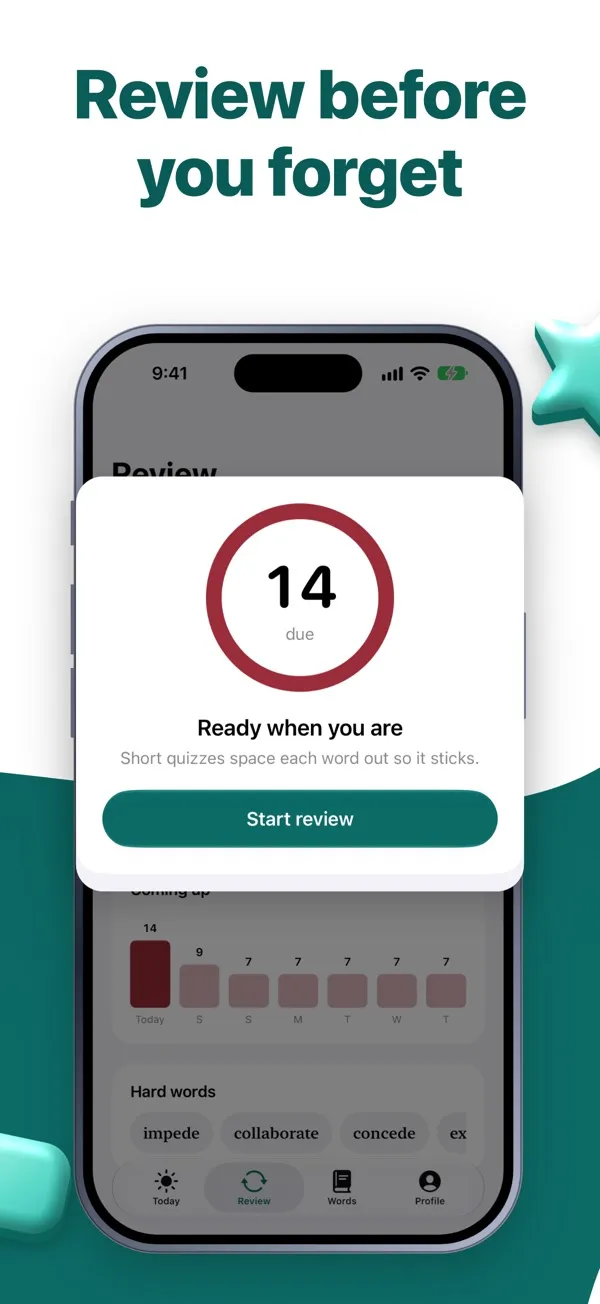

WordHabit: Learn English Words
A few English words a day from lists for IELTS, TOEFL, SAT, YDS and more, each with an example and the meaning in your language, back just before you would forget it.
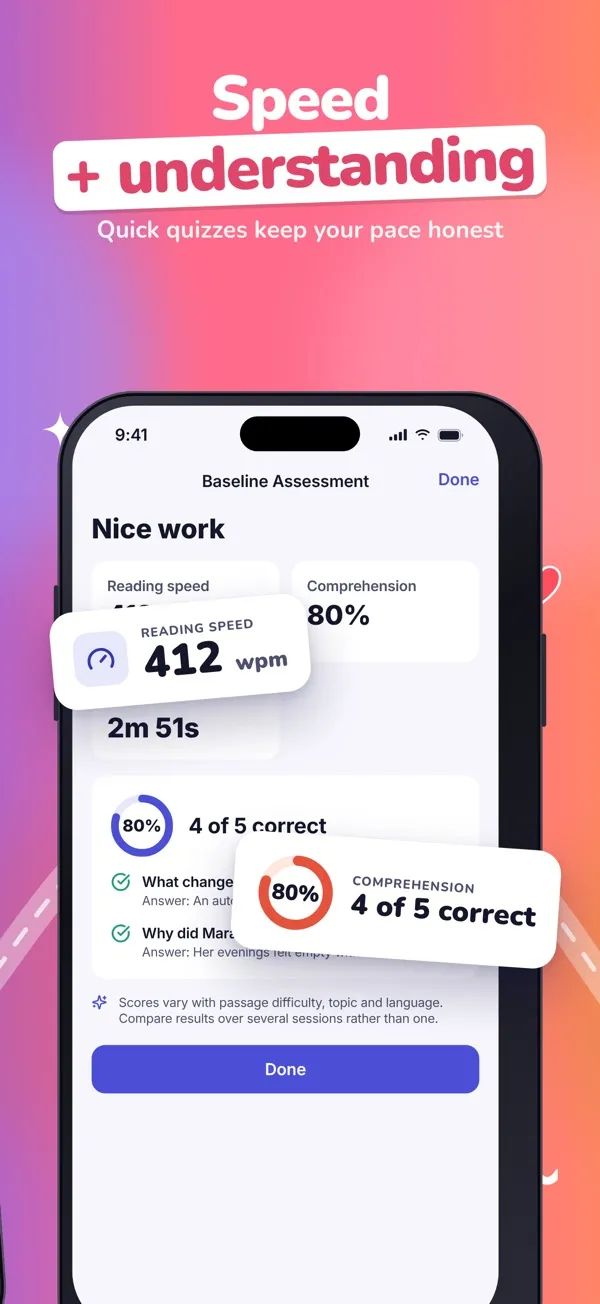

ReadPace: Speed Reading & RSVP
Read your own PDFs, EPUBs and articles one word at a time, in phrases or behind a guide line, with speed and comprehension charted apart.

Questions people ask
Are these study tools free?
Yes. Every tool is free, with no account, no sign-up and no limit on how often you use it.
Is my text uploaded anywhere?
No. Notes, word lists and essays stay in your browser. The only requests that leave the page are DOI lookups, which go from your browser straight to the public registries Crossref and DataCite.
Can the citation generator make up a reference?
No. References come only from the DOI record or from what you type. A missing detail is left out and named, never guessed.
Do the tools work on a phone?
Yes. They work in current Safari, Chrome, Edge and Firefox on phones, tablets and computers. The spelling test needs a browser that can speak, which all of these can.