Free online developer tools Read any repo, decode any string
Free developer tools that work in your browser: repository figures straight from GitHub, a Markdown editor and README tools, and the encoders you open every day, from Base64 and URL decode to JWT, UUID, hashes, cron and regex. Nothing to install, no sign-in, and tokens and text stay on your device.
All 22 tools- Base64
- aGVsbG8sIHdvcmxk
- URL encoded
- hello%2C%20world
- SHA-256
- 09ca7e4eaa6e8ae9c7d261167129184883644d07dfba7cbfbc4c8a2e08360d5b
- Slug
- hello-world
The whole deck: 22 tools
No tool matches that. Clear the field to see all of them.
Read a GitHub repository
GitHub figures on these cards were read on 24 Nov 2026.
GitHub repo analyzer
Stars, forks, size, languages, license and activity for any public repository
Compare GitHub repositories
Two to four repositories side by side, the leader marked on each row
Release download counter
Download counts for every release asset, with totals per release
Repository health check
README, license, contributing guide, templates and recent activity, checked
GitHub license checker
Which license a repository uses and what it lets you do
GitHub topics explorer
The most-starred repositories under any topic, filtered by language
Write Markdown and READMEs
README preview
See a README the way GitHub shows it, from a repository or pasted
Markdown editor with live preview
Write on the left, read on the right; copy clean HTML or save .md
Markdown table generator
Type in a grid or paste from a spreadsheet or CSV
Markdown table of contents generator
A linked contents list with the anchors GitHub uses
Files every repository needs
Encode, decode and generate
Base64 encode and decode
Text or any file to Base64, and back to text, an image or a PDF
URL decode and encode
Percent-encoding both ways, and a URL split into readable parts
JWT decoder
Header, payload and expiry of a token, decoded on your device
UUID generator
Random v4 or time-ordered v7, up to 1000 at once
MD5 and SHA hash generator
MD5, SHA-1 and SHA-256 of text or a file, checked against a checksum
Cron expression generator
Build a schedule, read it in words and see the next runs
Regex tester
Matches highlighted, groups listed and replacements previewed
HTML entities and string escape
Encode or decode entities, escape strings, copy symbols from the list
Slug generator
Titles to clean URL slugs, many lines at once
Which tool for which job
Each tool does one job. Start from what is in front of you:
| You have | Use |
|---|---|
| A repository you are about to depend on | GitHub repo analyzer |
| Two or three libraries to choose between | Compare GitHub repositories |
| A question about whether you may use some code | GitHub license checker |
| A README to write before you push | Markdown editor |
| A spreadsheet that should be a Markdown table | Markdown table generator |
| A new repository with no .gitignore or LICENSE | .gitignore generator |
| A long string ending in = or starting with data: | Base64 decode |
| A link full of %20, %3D and %2F | URL decode |
| A token starting with eyJ | JWT decoder |
| A table that needs primary keys | UUID generator |
| A download and its published checksum | Hash generator |
| A crontab line nobody can read | Cron expression generator |
| A pattern that matches too much | Regex tester |
| JSON to format, validate or compare | json.cihat.dev |
Five facts behind the encoders
Base64 adds a third. Every 3 bytes become 4 characters (RFC 4648), so a 30 KB image becomes 40 KB of text. It is an encoding, not encryption.
URLs carry UTF-8 bytes. Each byte outside the safe set is written as % and two hex digits (RFC 3986): ş is two bytes, so it travels as %C5%9F.
A JWT is readable by anyone. Its payload is only base64url-encoded (RFC 7519). Only checking the signature with the right key proves who issued it.
UUID v7 tells the time. Its first 48 bits are Unix time in milliseconds (RFC 9562, 2024), so new IDs sort after old ones. A v4 is 122 random bits and tells nothing.
Cron days are OR, not AND. When both day of month and day of week are set, a job runs on any day that matches either one (POSIX crontab).
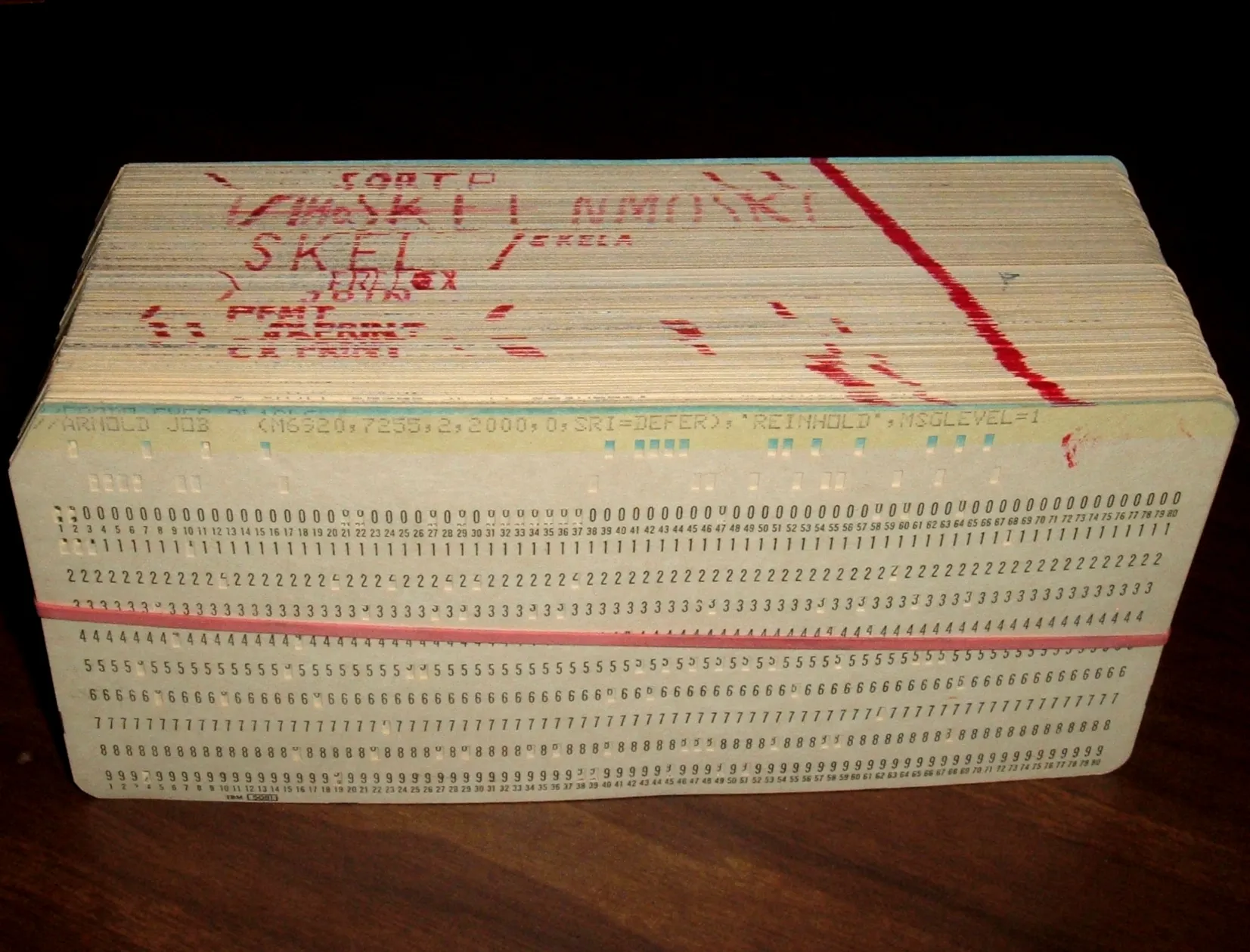
Version control, 1969
Every card in this deck is one line of a PL/I program written for an IBM 360. The marker lines across its top edge show the edits: where cards were added, replaced or reordered. A repository keeps the same story in commits, and the repository tools read it from GitHub without a key.
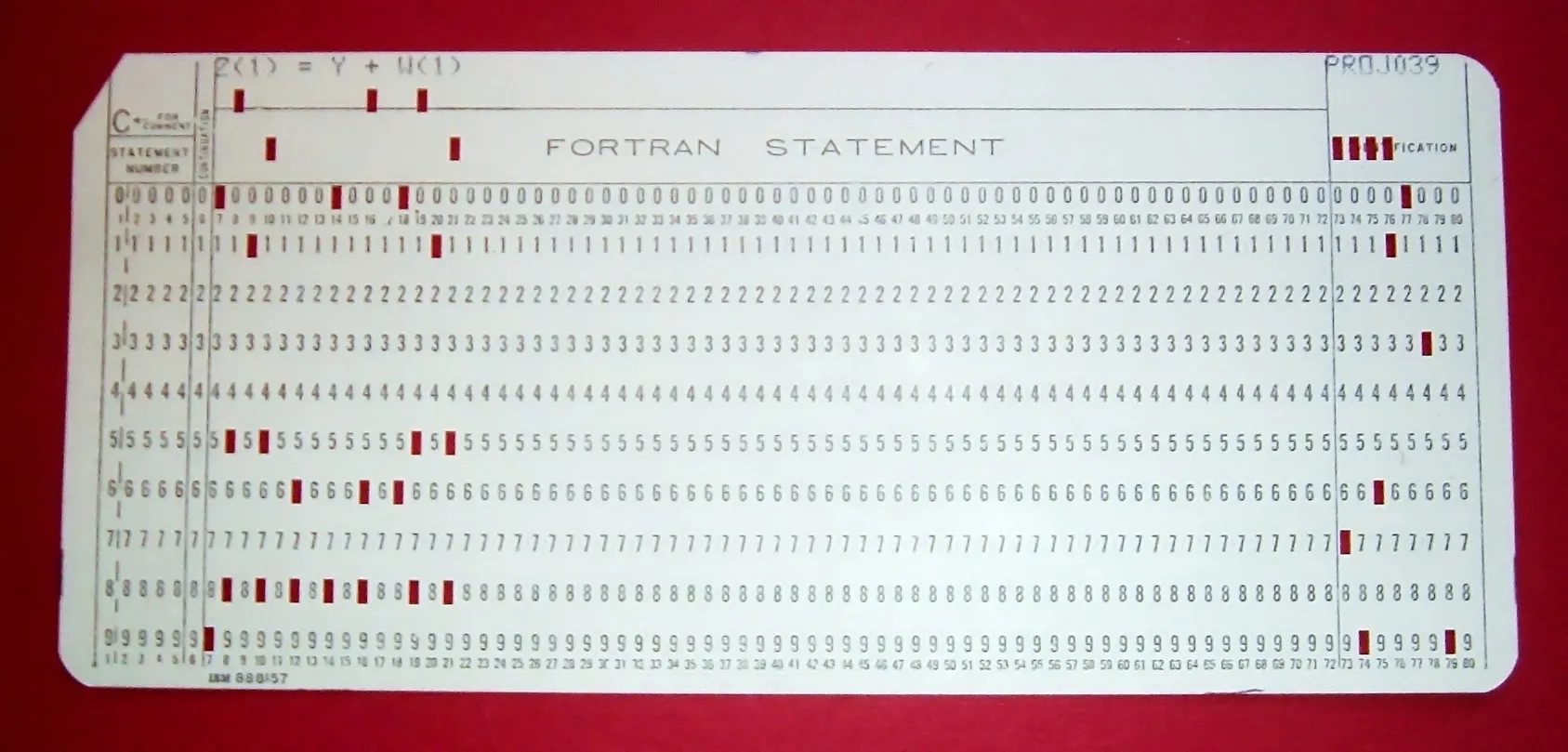
The single card holds one Fortran statement, Z(1) = Y + W(1), one character per column. The encoders here do the same job in printable text: Base64, URL encoding and HTML entities turn bytes into characters another system can carry.
Analyze a repository60
requests an hour
No key, no sign-in
GitHub answers these tools directly, without a token. Each network gets 60 API requests an hour; every tool shows how many are left and when they renew.
Topic search has its own allowance: 10 searches a minute. Markdown, file and encoder tools use none.
Questions people ask
Do these tools need my GitHub account?
No. They use GitHub’s public API without a token, so they read public repositories only and never ask you to sign in.
What does this site see?
Nothing you type. Repository names go from your browser to api.github.com; Markdown, tokens, hashes and everything else are handled in your browser. The site counts page views and tool uses anonymously.
Why did a tool say my requests ran out?
GitHub allows 60 requests an hour per network without signing in, shared by everything on that network. The tool shows the time they renew; answers already loaded stay.
Is the Markdown rendered safely?
Yes. Markdown is rendered with GitHub Flavored rules and cleaned with DOMPurify, so scripts, styles and event handlers in pasted text never run.
Are these developer tools free?
Yes, all 22, with no account and no usage limit of their own. The GitHub tools share GitHub’s allowance of 60 requests an hour per network.
Where are the trending GitHub repositories?
This site reads one repository or topic at a time. For daily trending lists by language, see githubba.cihat.dev.