Will your speech fit the time you have?
Twelve free tools for talks, presentations and videos: time the script, find your pace, set it for a prompter, keep the clock and clean up the subtitles. Nothing leaves your browser.
Light off: press Play to read it at this pace
45 words at 130 words per minute · pause marks: 2 · Set your own pace and pauses
Everything for the talk, in running order
Each card shows what the tool gives you. Every one is free, needs no account and works on a phone.
Time and pace
How long it runs, how fast you speak, and the clock on the day.
- Speech time calculatorPaste a script, see how long it takes to say at your pace
- Words for a speech lengthHow many words a 3, 5 or 10 minute speech needs
- Speaking rate (words per minute)Read a passage aloud and time it, or enter words and minutes
- Presentation timerFull-screen countdown with green, yellow and red signals
- Rehearsal timerTime each section of a run-through against your target
The script
Words shaped for reading aloud: prompter lines, plain sentences, fewer fillers.
- Teleprompter script formatterOne thought per line, pause marks, stage notes out
- Script line breakerBreak text into lines of a set length at natural pauses
- Script readability checkerFlesch score for English, Ateşman for Turkish, long sentences marked
- Filler word counterCount um, like and you know in a transcript, per 100 words
Subtitles and transcripts
From a subtitle file back to a script, and subtitles checked before you ship.
Words for the time you have
At a relaxed 130 words per minute, before you keep any time for pauses.
- 1 minute
- 130 words
- 3 minutes
- 390 words
- 5 minutes
- 650 words
- 10 minutes
- 1,300 words
- 20 minutes
- 2,600 words
Which tool for which job
Most speaking jobs start from a limit: the minutes on the programme, a contest light, a word count, a subtitle that has to be read before it disappears. Start from what you need to end up with.
| You need | Use |
|---|---|
| To know how long your script runs | Speech time calculator |
| To know how much to write for a 3, 5 or 10 minute slot | Words for a speech length |
| Your own pace instead of a guess | Speaking rate test |
| Green, yellow and red lights for a speaker on the day | Presentation timer |
| To see which section of a run-through runs long | Rehearsal timer |
| A script laid out to read from a prompter | Teleprompter script formatter |
| Text broken into lines of a set length | Script line breaker |
| Sentences short enough to say in one breath | Readability checker |
| To count the um, like and you know in a rehearsal | Filler word counter |
| A script back from a subtitle file | SRT to text |
| A clean transcript from Zoom, Teams or YouTube captions | VTT to text |
| Subtitles checked for reading speed before you publish | Subtitle reading speed checker |
The numbers behind the tools
Reading aloud averages 183 words a minute. That is the mean for adults reading English aloud across 77 studies (Brysbaert, 2019); silent reading of non-fiction averages 238. Talks run slower than reading aloud, so the time tools plan at 130 and let you enter your own rate.
Turkish runs fewer words a minute, not slower. Reading the same texts aloud, Turkish readers averaged 166 words a minute and English readers 228, yet both finished a text in about the same time (IReST, 2012). Turkish words are longer, so a Turkish script needs fewer words for the same slot.
A 5 to 7 minute speech is out under 4:30 or over 7:30. Toastmasters shows green at 5, yellow at 6 and red at 7, and disqualifies outside 4:30 to 7:30 (Speech Contest Rulebook, 2026–2027). Table Topics has no margin below 1:00.
Word wants a Flesch score of 60 to 70. Microsoft recommends that range for most documents. A script for the ear should score higher; Turkish text is scored with Ateşman’s formula, because Flesch gives Turkish negative scores.
Subtitles have a speed limit. Netflix caps adult subtitles at 20 characters a second and 42 characters a line in English; the reading speed checker tests every cue against it.
The old ways, now in a browser tab
Speakers have always timed their words, typed them big and squeezed them into subtitles. These tools do the same jobs.
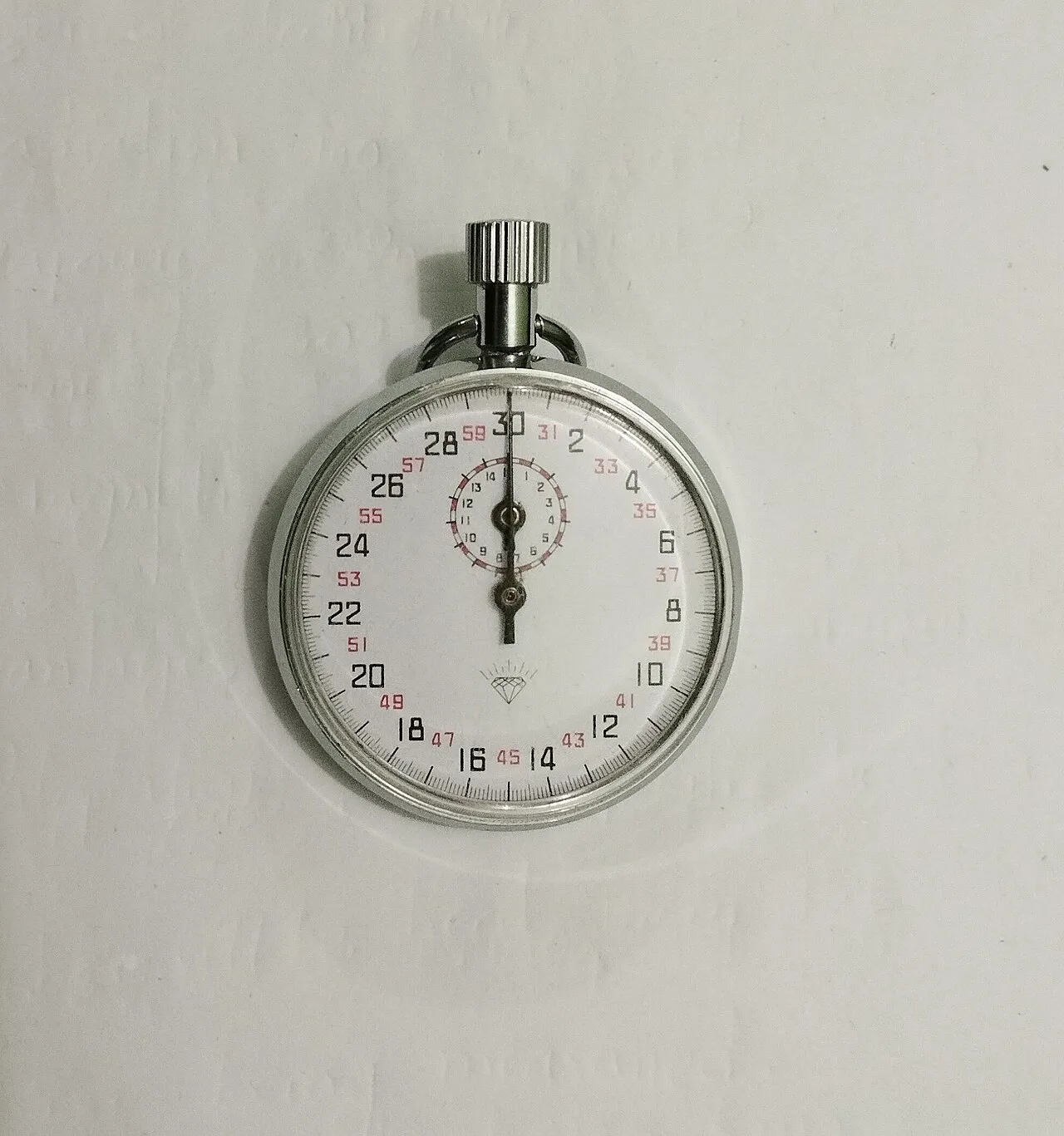 Speech contests were kept to time by hand. The presentation timer shows green, amber and red, full screen.Presentation timer
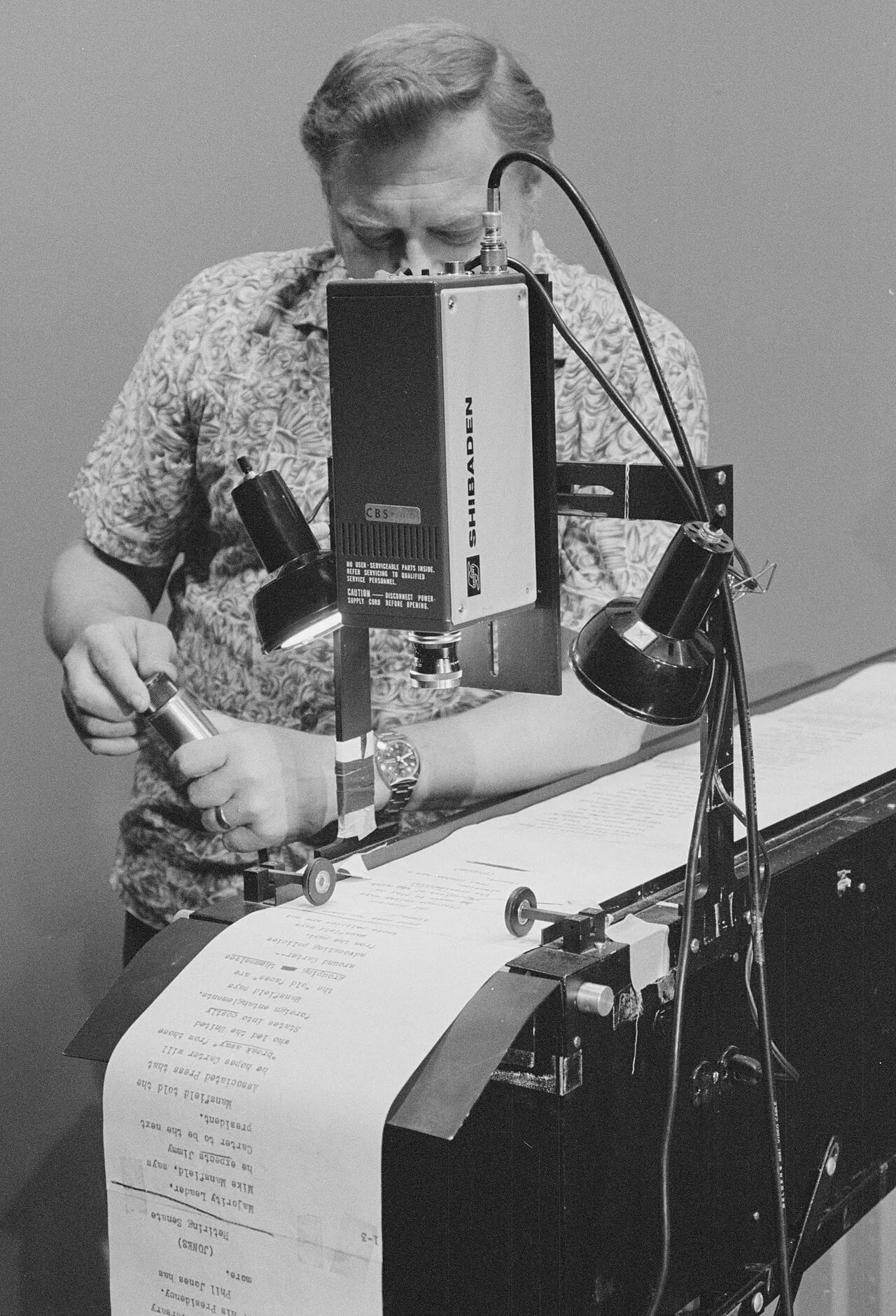 At WCCO-TV the script was typed large on a paper roll and filmed for the prompter. The formatter sets one thought per line.Teleprompter script formatter
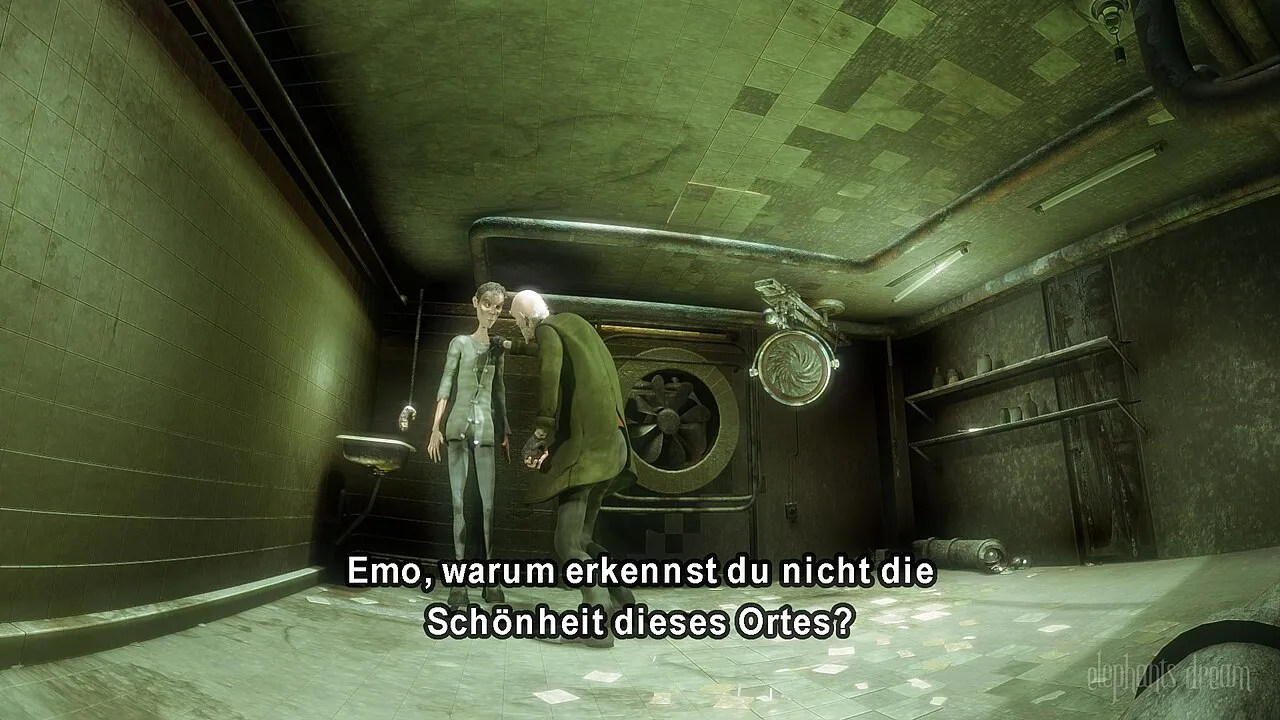 Two lines and a few seconds: every subtitle is a reading race. The checker flags cues that go too fast.Subtitle reading speed checker
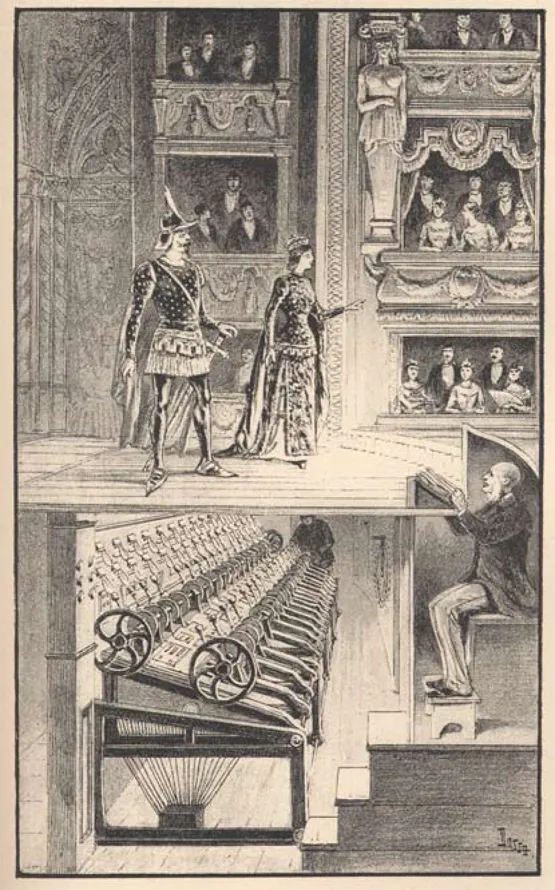
The prompter used to sit under the stage
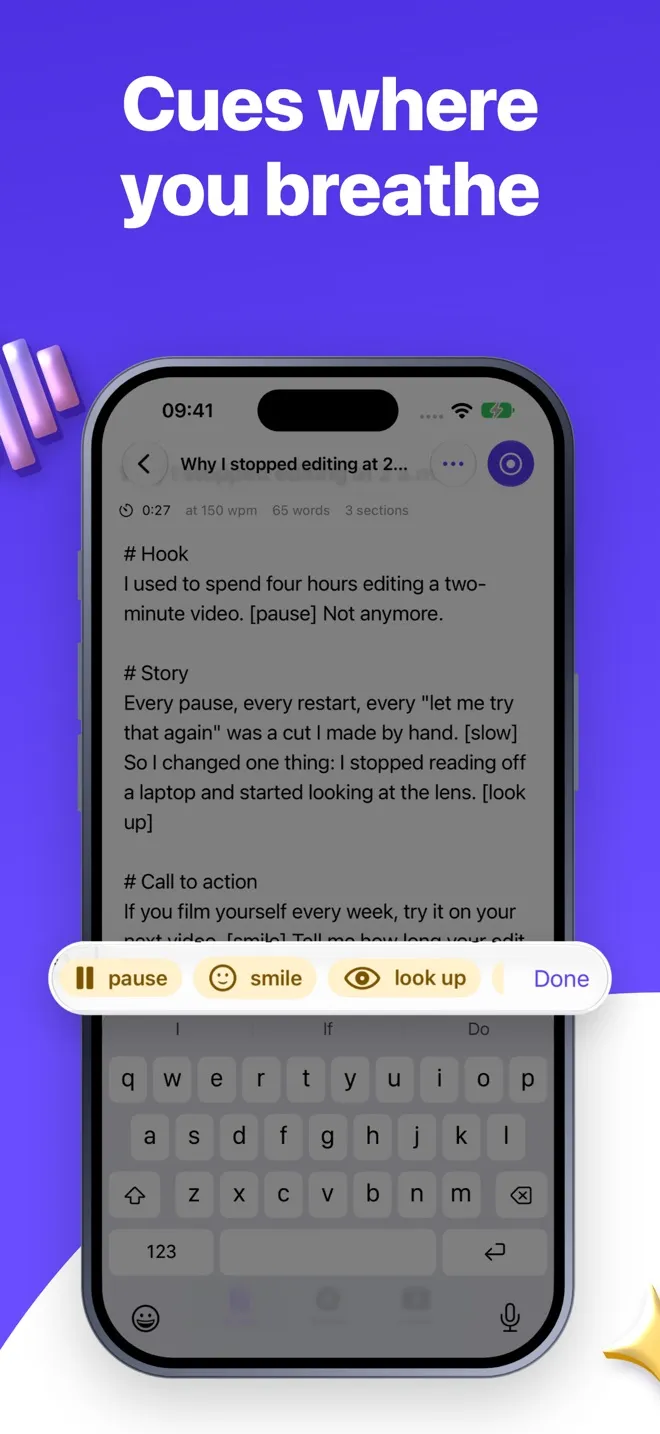
Theatres kept a prompter in a box at the front of the stage, following the script and feeding the next line. Cue does that job under your phone’s camera.

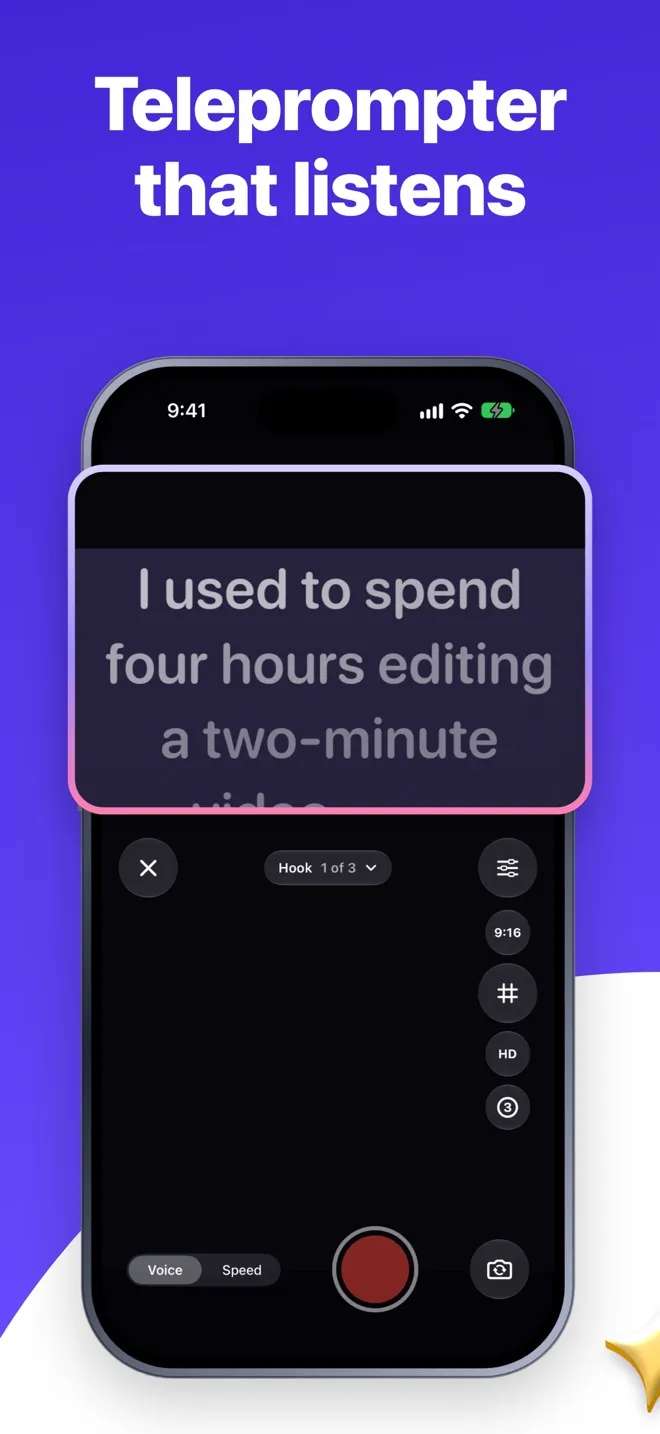
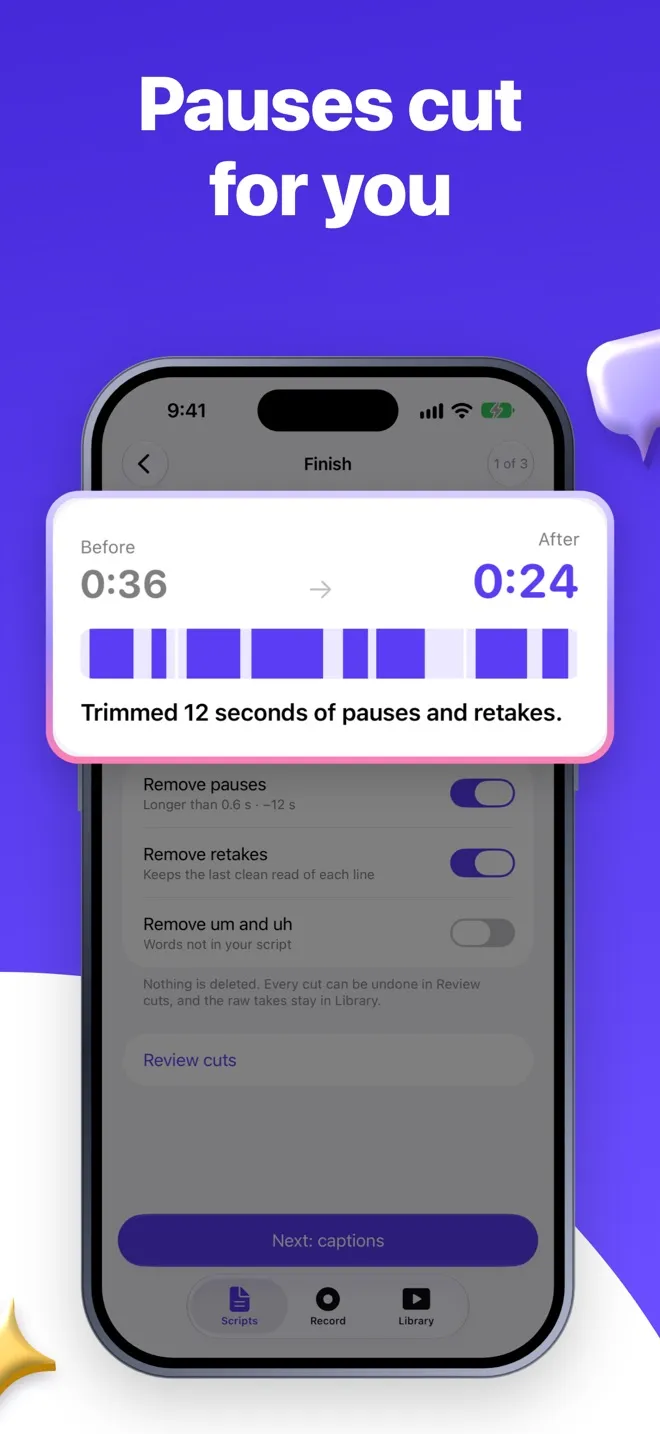
Cue: Teleprompter That Listens
Cue is a teleprompter that listens: read your script aloud and it scrolls with your voice, keeping the line you are on right under the camera.

Need a teleprompter right now?
The free online teleprompter lives on Cue’s own site. It scrolls your script in the browser, on a laptop or a phone.
Questions people ask
Are these speech tools free?
Yes. Every tool is free, with no account, no watermark and no limit on use.
Is my script or subtitle file uploaded?
No. Every tool runs in your browser. Scripts, transcripts and subtitle files never leave your device.
Do the tools listen to my voice?
No. The speaking rate test and the timers are clocks you start and stop; nothing is recorded.
How many words is a 5-minute speech?
About 650 words at a relaxed 130 words per minute, 550 slow and 800 fast. The words for a speech length tool works it out for any length and pace, with time kept back for pauses.
Which pace should I use to time a speech?
Your own. Read the passage in the speaking rate test aloud two or three times and use the middle result; 130 words per minute is only a starting point for English.
Do they work in Turkish?
Yes. Every page is in English and Turkish, and the readability checker and the filler word counter handle Turkish text with Turkish rules.